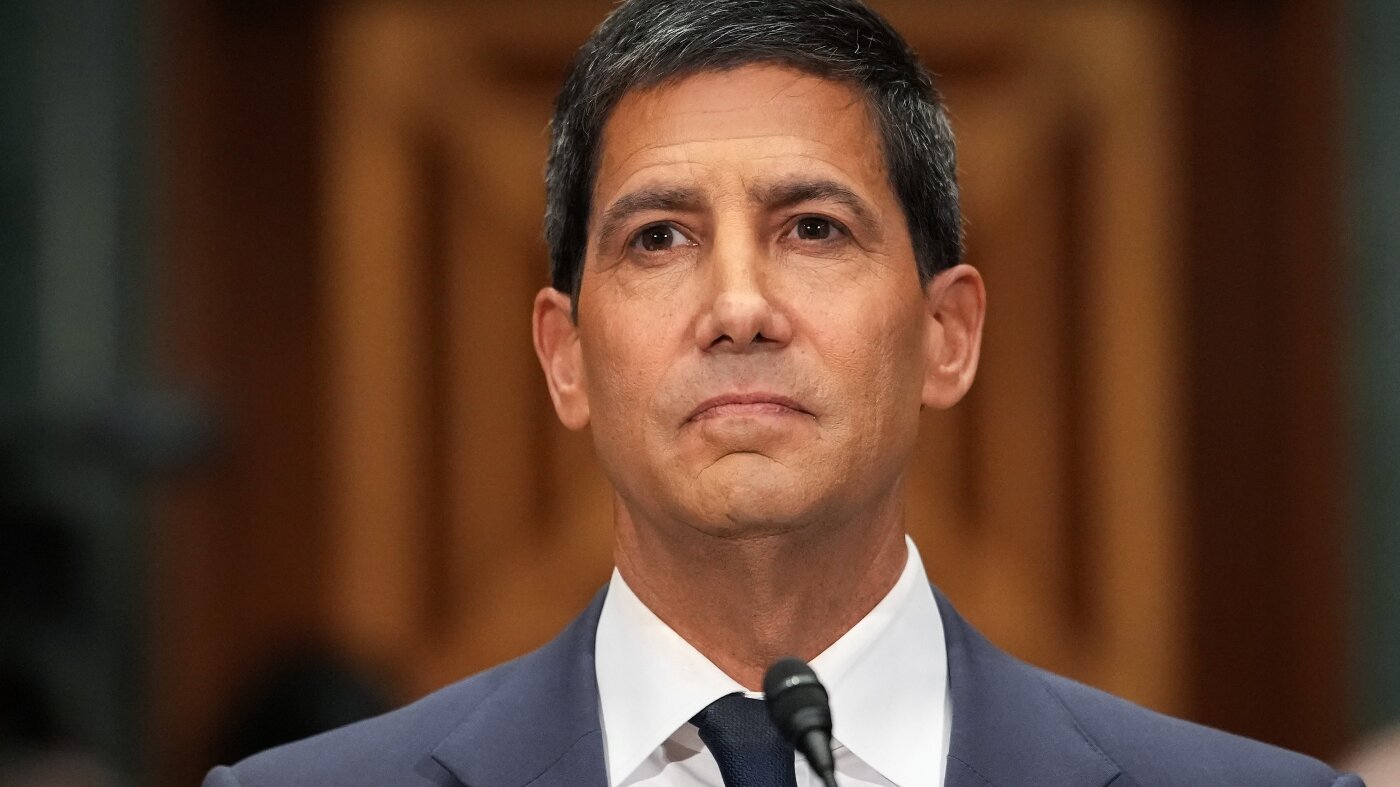
Explore US stock opportunities with expert analysis, real-time updates, and strategic guidance tailored for stable and long-term investment success. Our methodology combines fundamental analysis with technical indicators to identify stocks with the highest probability of success. We provide portfolio construction guidance, risk assessment, and market forecasts to help you achieve your financial goals. Start building long-term wealth today with our expert-curated insights and free research tools designed for smart investors. The U.S. Senate has confirmed Kevin Warsh as the next chair of the Federal Reserve, marking a pivotal leadership transition at the central bank. Warsh has publicly argued that there is room for the Fed to lower interest rates, though such a move could prove challenging given the current backdrop of rising inflation pressures.
Live News
The U.S. Senate voted today to confirm Kevin Warsh as the next chair of the Federal Reserve, succeeding Jerome Powell. The confirmation signals a potential shift in monetary policy direction as the central bank navigates a complex economic environment.
Warsh, a former Fed governor, has previously articulated a view that the central bank retains flexibility to ease monetary policy. In recent public remarks, he suggested that there is scope for interest rate cuts, but acknowledged that such decisions would need to be weighed against persistent inflationary trends. Consumer prices have been accelerating in recent months, adding to the difficulty of balancing growth support with price stability.
The confirmation comes at a time when financial markets are closely watching the Fed’s next moves. Inflation indicators have remained elevated, driven in part by supply chain disruptions and robust consumer demand. Meanwhile, economic growth has shown signs of moderation, creating a delicate policy calculus for the new chair.
Warsh is expected to formally take office in the coming weeks. His leadership will be closely scrutinized by lawmakers, economists, and investors as the Fed prepares for its next policy meeting. The transition also renews debate over the central bank’s dual mandate of maximum employment and stable prices.
Senate Confirms Kevin Warsh as Next Federal Reserve ChairQuantitative models are powerful tools, yet human oversight remains essential. Algorithms can process vast datasets efficiently, but interpreting anomalies and adjusting for unforeseen events requires professional judgment. Combining automated analytics with expert evaluation ensures more reliable outcomes.Monitoring market liquidity is critical for understanding price stability and transaction costs. Thinly traded assets can exhibit exaggerated volatility, making timing and order placement particularly important. Professional investors assess liquidity alongside volume trends to optimize execution strategies.Senate Confirms Kevin Warsh as Next Federal Reserve ChairIncorporating sentiment analysis complements traditional technical indicators. Social media trends, news sentiment, and forum discussions provide additional layers of insight into market psychology. When combined with real-time pricing data, these indicators can highlight emerging trends before they manifest in broader markets.
Key Highlights
- Leadership Change: The Senate confirmation of Kevin Warsh ends months of speculation over the next Fed chair. He brings prior experience as a Fed governor from 2006 to 2011.
- Rate Cut Debate: Warsh has publicly indicated that there is room for the Fed to lower interest rates, aligning with some market expectations for easing. However, rising inflation complicates this outlook.
- Inflation Challenge: Recent data points to continued upward pressure on consumer prices, making it difficult for the central bank to justify rate cuts without risking a resurgence in inflation.
- Market Implications: The confirmation introduces uncertainty about the pace and direction of monetary policy. Bond yields and the U.S. dollar could experience volatility as investors recalibrate expectations.
- Economic Context: The Fed faces a deteriorating growth outlook alongside persistent inflation, a classic stagflationary scenario that requires careful navigation.
- Policy Meeting Ahead: All eyes are on the next Federal Open Market Committee meeting, where Warsh may signal his initial policy leanings. No rate decision is expected at the next meeting, but forward guidance could shift.
Senate Confirms Kevin Warsh as Next Federal Reserve ChairMacro trends, such as shifts in interest rates, inflation, and fiscal policy, have profound effects on asset allocation. Professionals emphasize continuous monitoring of these variables to anticipate sector rotations and adjust strategies proactively rather than reactively.Scenario planning is a key component of professional investment strategies. By modeling potential market outcomes under varying economic conditions, investors can prepare contingency plans that safeguard capital and optimize risk-adjusted returns. This approach reduces exposure to unforeseen market shocks.Senate Confirms Kevin Warsh as Next Federal Reserve ChairCorrelating futures data with spot market activity provides early signals for potential price movements. Futures markets often incorporate forward-looking expectations, offering actionable insights for equities, commodities, and indices. Experts monitor these signals closely to identify profitable entry points.
Expert Insights
The confirmation of Kevin Warsh as Fed chair introduces a new variable into an already complex economic equation. His stated openness to rate cuts suggests a potential dovish tilt, but the reality of rising inflation may temper any immediate easing moves.
Market participants will likely parse Warsh’s future speeches and testimony for clues about his policy framework. Given the current data—elevated inflation and moderating growth—the Fed could face a difficult trade-off. Lowering rates too soon might fuel further price increases, while keeping rates too high could exacerbate an economic slowdown.
“The path forward for the Fed under Warsh is far from straightforward,” analysts note. “The central bank will need to communicate its strategy carefully to avoid destabilizing market expectations.” Investors should prepare for potential shifts in rhetoric as the new chair establishes his credibility.
From an investment perspective, this transition may increase volatility in interest-rate-sensitive sectors such as real estate, financials, and utilities. Fixed-income markets could see repricing as the market absorbs the implications of new leadership. While no immediate policy change is expected, the confirmation adds an element of uncertainty for portfolio positioning.
Long-term, Warsh’s tenure could reshape the Fed’s approach to inflation targeting and forward guidance. Until more clarity emerges, cautious monitoring of economic indicators and central bank communication remains prudent for market participants.
Senate Confirms Kevin Warsh as Next Federal Reserve ChairDiversifying information sources enhances decision-making accuracy. Professional investors integrate quantitative metrics, macroeconomic reports, sector analyses, and sentiment indicators to develop a comprehensive understanding of market conditions. This multi-source approach reduces reliance on a single perspective.The interplay between short-term volatility and long-term trends requires careful evaluation. While day-to-day fluctuations may trigger emotional responses, seasoned professionals focus on underlying trends, aligning tactical trades with strategic portfolio objectives.Senate Confirms Kevin Warsh as Next Federal Reserve ChairTiming is often a differentiator between successful and unsuccessful investment outcomes. Professionals emphasize precise entry and exit points based on data-driven analysis, risk-adjusted positioning, and alignment with broader economic cycles, rather than relying on intuition alone.