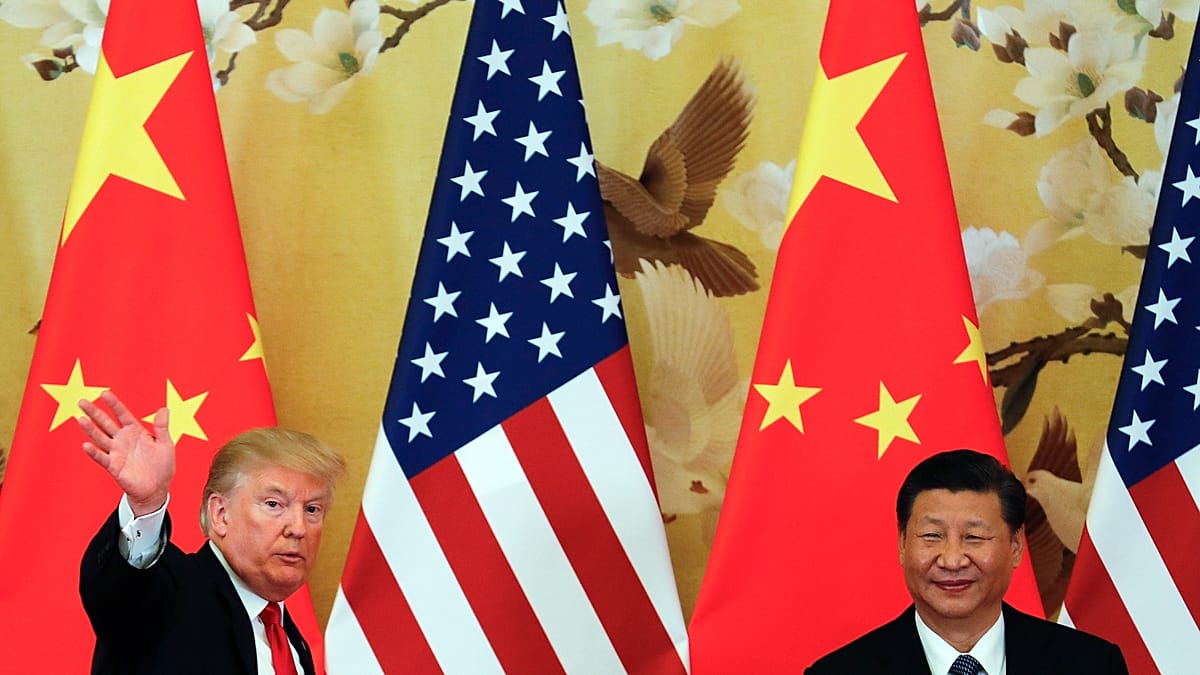
Build your portfolio alongside our experts. Risk-adjusted optimization to create a resilient portfolio that weathers volatility and captures upside. Diversify across sectors to minimize concentration risk. US President Donald Trump’s visit to Beijing this week highlights the intensifying economic competition between the world’s two largest economies. The trip comes as both nations vie for leadership in technology, trade, and global influence, with markets closely watching for potential policy shifts.
Live News
- The visit marks one of the highest-level engagements between the two economies in recent years, highlighting the centrality of economic diplomacy amid ongoing tensions.
- Key discussion points are likely to include trade imbalances, technology transfer rules, and the competitive landscape for emerging industries such as electric vehicles, 5G networks, and clean energy.
- Both nations continue to vie for leadership in global economic institutions and standard-setting bodies, a dynamic that influences investment flows and regulatory frameworks worldwide.
- The rivalry has accelerated efforts by companies in both countries to diversify supply chains and reduce dependency on each other’s markets, a trend with potential implications for manufacturing and logistics sectors.
- Financial markets are monitoring the visit for any announcements that might alter the tariff landscape or affect bilateral trade volumes, though concrete outcomes remain uncertain at this stage.
Trump in Beijing: US-China Economic Rivalry Intensifies Amid Trade and Tech TensionsDiversification in analysis methods can reduce the risk of error. Using multiple perspectives improves reliability.Investors may adjust their strategies depending on market cycles. What works in one phase may not work in another.Trump in Beijing: US-China Economic Rivalry Intensifies Amid Trade and Tech TensionsData platforms often provide customizable features. This allows users to tailor their experience to their needs.
Key Highlights
US President Donald Trump’s current visit to China underscores the deepening rivalry between the United States and the People’s Republic of China, two economic superpowers whose competition now extends well beyond trade balances. The visit, taking place this week in Beijing, arrives at a time when bilateral relations are increasingly defined by a contest for technological supremacy, supply chain dominance, and global economic sway.
The meeting between Trump and Chinese leaders is expected to address a range of topics, including tariffs, intellectual property protections, and the future of advanced industries such as semiconductors and artificial intelligence. Both nations have invested heavily in these sectors, and their competing visions for global standards and market access are shaping the broader economic landscape.
Observers note that the rivalry has evolved from a focus on traditional trade deficits to a more complex struggle over innovation and strategic influence. The US has implemented export controls and investment restrictions targeting Chinese technology firms, while China has accelerated efforts to achieve self-reliance in key technologies through state-backed initiatives.
The visit also takes place against a backdrop of shifting alliances, with both countries seeking to expand their economic partnerships in regions such as Southeast Asia, Europe, and Africa. The outcome of this week’s talks could signal the direction of future economic policies and may affect global supply chains, currency markets, and trade flows.
Trump in Beijing: US-China Economic Rivalry Intensifies Amid Trade and Tech TensionsMonitoring global indices can help identify shifts in overall sentiment. These changes often influence individual stocks.Many investors underestimate the importance of monitoring multiple timeframes simultaneously. Short-term price movements can often conflict with longer-term trends, and understanding the interplay between them is critical for making informed decisions. Combining real-time updates with historical analysis allows traders to identify potential turning points before they become obvious to the broader market.Trump in Beijing: US-China Economic Rivalry Intensifies Amid Trade and Tech TensionsObserving market sentiment can provide valuable clues beyond the raw numbers. Social media, news headlines, and forum discussions often reflect what the majority of investors are thinking. By analyzing these qualitative inputs alongside quantitative data, traders can better anticipate sudden moves or shifts in momentum.
Expert Insights
The economic comparison between the US and China reflects fundamental differences in their growth models, governance structures, and strategic priorities. Analysts suggest that while the US maintains advantages in financial depth, innovation ecosystems, and rule-of-law frameworks, China’s strengths lie in manufacturing scale, infrastructure investment, and state-led industrial policy.
Trade tensions between the two economies have persisted for years, with periodic escalations and pauses creating an unpredictable environment for global businesses. The current visit may provide opportunities for dialogue, but structural disagreements—particularly over technology access and market reciprocity—are unlikely to be resolved in a single meeting.
Market participants should consider the potential for policy shifts in areas such as semiconductor export controls, data governance, and investment screening mechanisms. Any changes could have ripple effects across cross-border mergers, supply chain logistics, and sector-specific valuations.
The broader context suggests that the US-China economic rivalry is a multi-decade phenomenon that will continue to shape investment themes in technology, manufacturing, and commodities. Investors are advised to monitor policy developments closely, but near-term market reactions to diplomatic events may be muted without concrete agreements. As both nations pursue their economic interests, the path forward appears marked by both competition and occasional cooperation.
Trump in Beijing: US-China Economic Rivalry Intensifies Amid Trade and Tech TensionsWhile technical indicators are often used to generate trading signals, they are most effective when combined with contextual awareness. For instance, a breakout in a stock index may carry more weight if macroeconomic data supports the trend. Ignoring external factors can lead to misinterpretation of signals and unexpected outcomes.Risk management is often overlooked by beginner investors who focus solely on potential gains. Understanding how much capital to allocate, setting stop-loss levels, and preparing for adverse scenarios are all essential practices that protect portfolios and allow for sustainable growth even in volatile conditions.Trump in Beijing: US-China Economic Rivalry Intensifies Amid Trade and Tech TensionsSome investors rely heavily on automated tools and alerts to capture market opportunities. While technology can help speed up responses, human judgment remains necessary. Reviewing signals critically and considering broader market conditions helps prevent overreactions to minor fluctuations.